
Blog · Costs
Defit Costs Sydney: What Affects the Quote?
See what affects Sydney defit costs, from the lease make-good clause and fit-out density to access, services and landlord handover.
Updated 16 April 2026 · 5 min read
Share this guide
Short answer
A Sydney defit quote is shaped by the lease make-good clause, the current fit out, building access, services, waste and the landlord handover standard. Start with the lease wording, current photos and the date the tenancy must be returned.
Key takeaways
- Confirm the landlord handover scope before asking contractors to price it.
- Separate removal from patching, reinstatement and specialist service work.
- Allow time for building approvals, access bookings and the final inspection.
In this article
Start With the Lease, Not the Floor Area
A Sydney defit quote begins with the condition the tenant has agreed to return. That obligation usually sits in the lease make-good clause, any later landlord agreement and the original condition report. The floor area helps describe the tenancy, but it does not show which fit-out elements must be removed or reinstated.
Before requesting prices, collect the lease wording, current photos and the required handover date. If the clause is unclear, resolve the interpretation with the landlord or an appropriate property adviser rather than asking a strip out contractor to make a legal decision.
Defit, Strip Out and Make Good
These terms are often used together, but they do not always mean the same work:
- A defit removes the outgoing tenant's fit out to the agreed handover condition.
- A strip out is the physical removal of selected fixtures, finishes, partitions, joinery and other agreed elements.
- Make good can include removal plus reinstatement, patching, painting, service changes or other work required by the lease.
The quote should say which of those tasks are included. For example, removing an office partition does not automatically include restoring the ceiling grid, floor finish and every service connection around it.
What Shapes a Defit Quote
The Lease and Handover Standard
The largest variable is what the landlord expects at the end. One tenancy may be handed back as a cleared shell; another may retain ceiling grids, air conditioning, lighting or selected partitions. A negotiated landlord scope can also differ from the original lease wording.
Fit-Out Density
Open offices, heavily partitioned suites, retail tenancies and hospitality spaces contain different materials. Joinery, counters, shelving, signage, flooring, ceilings and back-of-house equipment all add to the removal and load-out plan.
Access and Building Rules
The programme may need to work around goods lifts, loading docks, common-area protection, induction requirements, security access and approved work windows. Confirm these details with building or centre management before assuming how the material will leave the tenancy.
Services and Specialist Work
Electrical, hydraulic, fire, mechanical and communications services may need to be isolated, removed, capped, relocated or retained. The quote should identify which tasks need other trades and whether their work is included or separate.
Waste and Material Movement
Waste volume, material type, carry distance and dock or bin availability affect labour and transport. Centre rules may also control when bins arrive and how waste moves through shared areas.
Office, Retail and Hospitality Differences
An office strip out commonly involves partitions, workstations, joinery, floor coverings, ceilings and redundant services. The handover often depends on the base-building standard and the landlord's inspection process.
A shop or retail defit may add shopfront finishes, signage, display systems, counters and shopping-centre controls. Hospitality premises can include fixed counters, food-service equipment, wall finishes and more involved service connections.
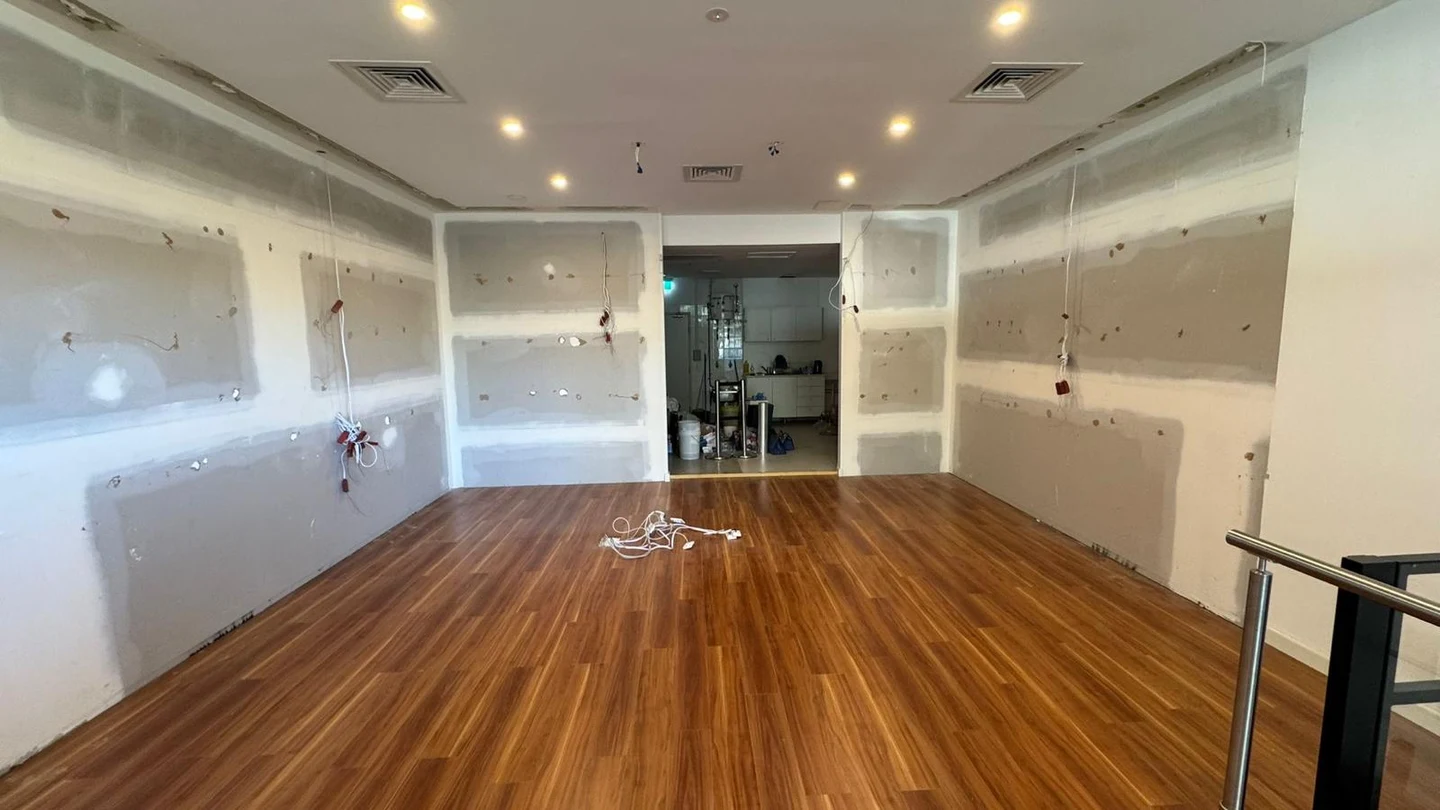
The photographed Mona Vale shop defit shows the visible removal of a hospitality fit out. It is useful project context, but the lease and building rules for another tenancy still determine its scope.
What a Defit Quote Should Include
A clear quote should make the handover easy to compare with the lease. Check for:
- the exact fixtures, finishes and partitions being removed;
- items that remain in the tenancy;
- protection of lifts, lobbies and adjoining areas;
- loading, waste transport and disposal arrangements;
- service-disconnection and make-safe boundaries;
- patching, painting, floor preparation or reinstatement items;
- building-management or landlord requirements allowed for;
- the expected completion and inspection sequence; and
- exclusions, assumptions and unresolved items.
Avoid comparing only the total. One contractor may have priced removal to a bare shell while another has included repair and reinstatement work.
Plan Backwards From the Handover Date
Allow time before the lease ends for scope agreement, building approvals, inductions, access bookings and the landlord's final inspection. If follow-up work is required after inspection, it needs to fit before key return or lease expiry.
A practical sequence is:
- Read the make-good clause and locate the original condition record.
- Ask the landlord or manager to confirm the expected handover in writing.
- Photograph the tenancy, services and access route.
- Separate removal work from patching, reinstatement and specialist trades.
- Confirm building rules, loading arrangements and available work windows.
- Agree how completion and landlord sign-off will be handled.
What to Send With a Quote Request
Send the tenancy address, floor or suite number, lease clause, landlord scope, current photos and handover date. Include plans if available and note anything that must remain, such as base-building services, ceilings, doors or selected partitions.
Photos of the loading dock, lift and route from the tenancy are particularly useful. They show constraints that an internal room photo cannot.
Master Strip Outs can then review the removal scope and identify the access, waste and handover details still needed before pricing.
Reliable Planning Sources
The NSW Small Business Commissioner (opens in new tab) explains that make-good provisions set out a tenant's end-of-term obligations and may require a premises to be returned to base-building or another agreed condition.
Other useful sources include:
- NSW Planning: exempt and complying development policy (opens in new tab)
- SafeWork NSW: demolition work (opens in new tab)
- NSW EPA: construction and demolition waste toolkit (opens in new tab)
Check the relevant council through the Sydney locations directory, then confirm the actual tenancy requirements with the landlord or building manager. Sources reviewed 4 August 2026.
Related articles
Keep reading
 18 June 2026
Strip Out Costs Sydney: What Affects Your Quote
See what affects strip out costs in Sydney and what to include when comparing quotes for residential, commercial or defit work.Read article 15 January 2026
How to Choose a Strip Out Contractor in Sydney
Compare Sydney strip out contractors by written scope, relevant project examples, site planning, credentials, waste and handover detail.Read article 12 February 2026
Sydney Strip Out Rules and Approvals 2026
Check the main Sydney strip out rules for 2026, including planning pathways, strata approval, demolition requirements, asbestos and waste.Read articleNext step
Need it stripped out?
Send photos, the suburb and what needs to come out. Mick will check the access and waste details before preparing your free quote.